
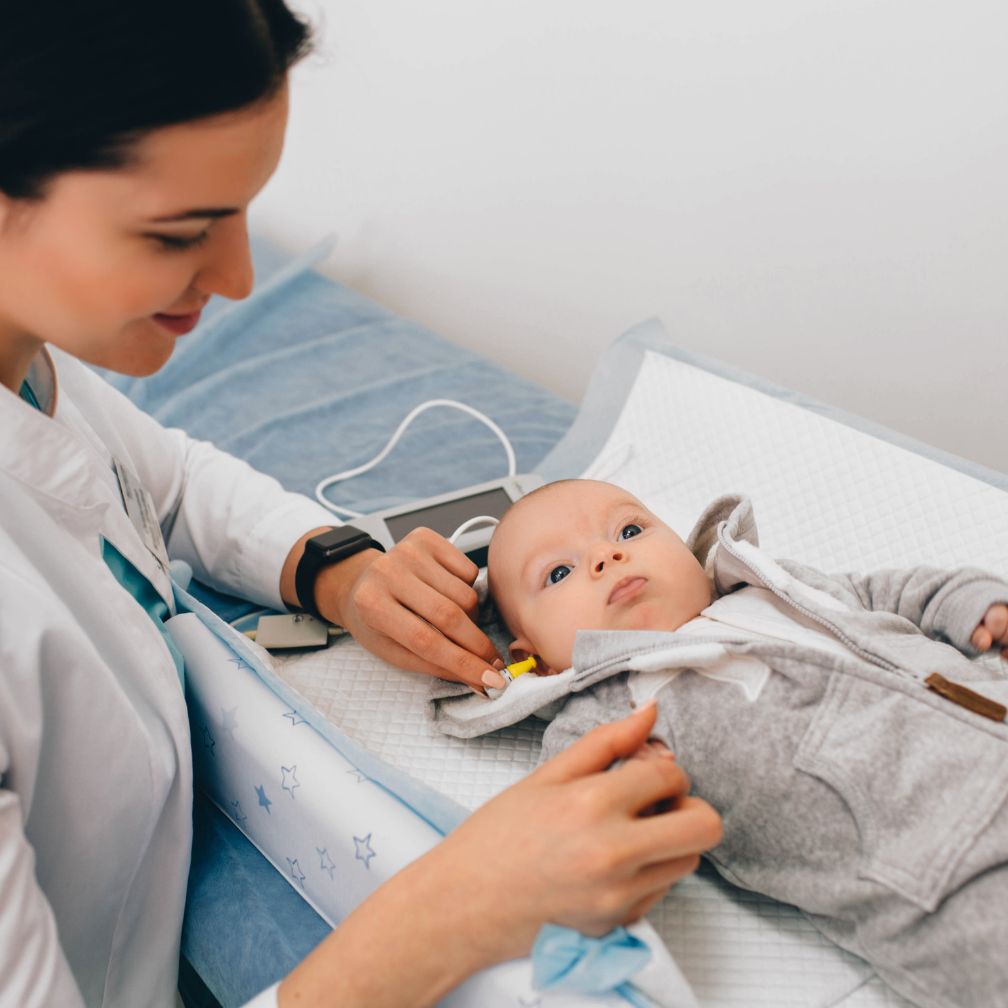
Hearing that your newborn didn’t pass a hearing screening can be scary for any parent. The good news is that a “refer” or “did not pass” result is not a diagnosis. Many babies who miss the first screening hear normally when they are tested again. And when a baby does have hearing loss, finding it early gives them the best start. At Hear SF on Geary Boulevard in San Francisco, our team wants families to understand what this result means and what to do next.
Why Babies Sometimes Don’t Pass the First Screening
- Fluid or debris in the ear: Babies are often born with fluid or vernix in the ear canal, which can block sound for a few days.
- Movement or crying: Screening works best when a baby is calm or asleep.
- Background noise: A busy hospital room can affect the results.
- Hearing loss: In some cases, the result points to a real hearing difference that needs a closer look.
What Happens Next
Your baby will usually have a second screening. If they still don’t pass, the next step is a full diagnostic hearing evaluation with a pediatric audiologist. These tests are safe, painless and often done while your baby sleeps.
Many hospitals and pediatricians follow the 1-3-6 guideline:
- Screening by 1 month of age
- Diagnostic testing by 3 months of age
- Support or treatment started by 6 months of age
Why Early Follow-Up Matters
The first months of life are an important time for language and brain development. When hearing loss is found early, babies can get hearing aids, therapy or other support right away. Many go on to develop strong speech, language and social skills.
Tips for Parents
Keep every follow-up appointment, even if your baby seems to respond to sound. Ask your pediatrician for a referral if one hasn’t been made. Write down questions before each visit so you don’t forget them.
Hearing Support for Your Whole Family
If you have questions about your own hearing or the hearing of an adult family member, call or text Hear SF at 415-319-7301.